
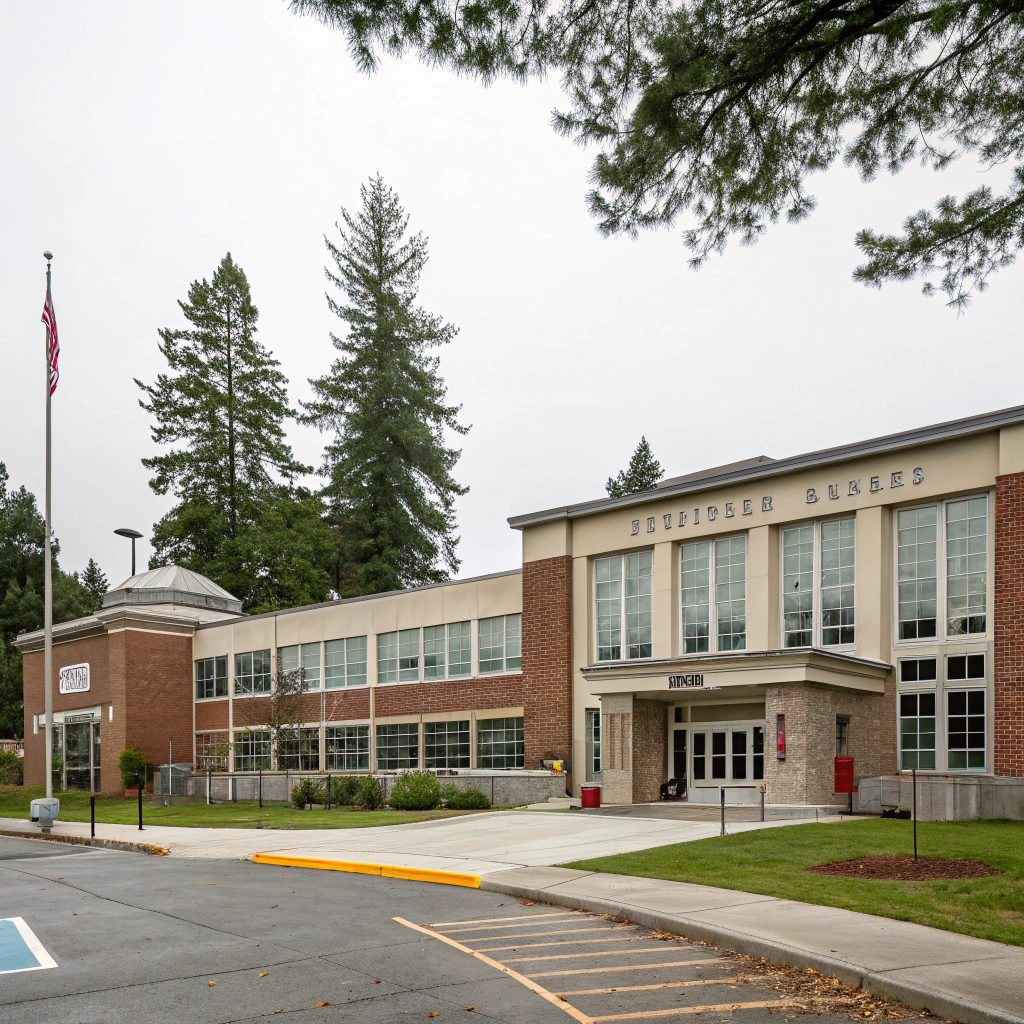
Project Will Spark Assessment On The Future of Several Westford School Buildings
The Robinson School building committee came before a joint meeting of the Westford Finance Committee (FINCOM) and Select Board last week, seeking a favorable recommendation for a 1.6M building feasibility study for the Robinson School. School Superintendent Christopher Chew, School Committee Chair Valerie Young and building committee member Lindsay Richard told the joint meeting, that a study is needed to determine the future of the Robinson school. They also stated that the outcome of the study would trigger a plan for consolidating several Westford schools. The committee gave unanimous approval to the request largely because the study would not involve any tax impact. Additionally, the state has indicated its willingness to commit to reimbursing 48% of the cost of any project that results from the study, along with the study itself. There was also a shared sense that the Robinson school building warranted examination.
School Superintendent Christopher Chew gave a detailed description of the conditions at the Robinson, noting that the roof is failing, the HVAC system is obsolete, the electricity and plumbing are beginning to deteriorate, and the layout and size of the classrooms are problematic. Chew noted that the school was built in 1969 utilizing the “open classroom” concept, which has since gone out of vogue. Chew also noted that the Robinson is one of three schools in need for review. The others include the Abbot and the Day school. The Robinson was chosen because Chew believes it is in the worse condition of all three.
Westford facility director Jeff Goodwin also gave testimony to the FINCOM and provided estimated renovation costs for each school. He listed Robinson at 9.9M. Abbot at 8.3M and the Day at 10.5M. Goodwin also noted that while the schools are all fire alarmed, they lack sprinkler systems.
The Robinson School Building Committee proposal seeks to partner with the Massachusetts School Building Authority (MSBA). The 1.6M appropriation for the study would fund a project manager (250K), architectural fees (900K) and produce a study with a scope of work valued at 272K. 150K would be placed in a contingency account. Dr. Chew explained that representatives from the MSBA have visited the school and have expressed a willingness to support the study; as well as, further work if the town decides to go forward. At the completion of the study, the town would have four choices; do nothing, bring the building up to code, renovate the building or commit to a new construction, Chew said.
Financing for the study was discussed. Finance Director Dan O’Donnell, offered that the project could be funded through a non- excluded bond. A vote to authorize the bond would have to be taken at the March town meeting. If it passed, the Town Treasurer would issue the bond. This would commit the town to annual payments of 80K for several years. Funding would come from general fund revenue and not through an excluded bond, which would attach payments to the property tax. Finance Committee member Nate McKinnon, a self-described advocate for the Robinson school, asked O’Donnell if the funding could come directly from free cash. This caused O’Donnell to pause and explain that taking 1.6M out of free cash would significantly deplete the town’s reserves, violating select board policy. McKinnon pressed the question. Select Board member John Cunningham re-assured McKinnon that bonding was an effective and prudent way to proceed.
Because the proposal did not exclude the possibility of new building construction, future excluded debt was also discussed in the event that the study’s findings recommended either a significant renovation or new construction. Finance Committee member Dennis Galvin shared data provided by the Town Treasurer regarding the potential impact of such a commitment. Galvin noted that under a 30M excluded bond, which was a figure earlier offered by the town manager, the tax hit would be $243 a year for the average taxpayer in town. For a 78M project, which the town manager offered as the cost of a recent building project she was associated with, the annual tax hit would $634. Galvin noted that town tax payers have already been saddled with average annual payments of $185 a year, above their regular property tax assessment, to pay for the renovations at the J.V. Library. Both McKinnon and Select Board member Tom Clay cautioned Galvin against speculating on cost at this stage of the discussion. Clay asked Galvin if his numbers factored in the 48% reimbursement. Galvin said they did not, and then put that question to O’Donnell, who said that the tax impact would be 48% less than the numbers that the Treasurer provided. Galvin, ultimately voted to approve the study, stating that the real discussion on this issue would take place once the feasibility study is completed and the report is released.
Leave a Reply